Gentle Yoga for Strength, Core Stability, and Low Back Support
- Katy Charoensatit
- Mar 15
- 4 min read
Strength, Core, and Psoas Yoga Flow for Low Back Support
A gentle strength-building yoga practice can be one of the most supportive things you do for your body. While stretching often gets most of the attention, building strength in the core, glutes, and stabilizing muscles is essential for supporting the spine and helping prevent discomfort or injury.
In this practice, we combine core activation, glute strengthening, hip mobility, and psoas stretching to create a balanced full-body yoga flow. These movements are designed to build strength gradually while remaining accessible for beginners and gentle yoga practitioners.
The result is a practice that helps you feel stronger, more stable, and more supported through the low back and hips.
Why Strength Matters for Low Back Health
Many people think low back discomfort only requires stretching. While mobility is important, strength and stability are just as essential.
Three muscle groups play a major role in supporting the spine:
1. The core muscles
The deep abdominal muscles help stabilize the spine during movement.
2. The glutes
Strong glutes support the pelvis and help reduce unnecessary strain on the low back.
3. The hip flexors and psoas
When these muscles become tight from prolonged sitting, they can contribute to low back tension.
A balanced yoga practice strengthens the muscles that support the spine while also improving mobility in the hips and legs.
Core Activation for Spinal Support
This practice begins with gentle core engagement while lying on the mat. One helpful visualization is imagining a ribbon wrapping around the low back and the front of the abdomen, gently tightening to create stability.
This engages the transverse abdominis, a deep core muscle that functions like a natural support belt for the spine.
Core activation in yoga focuses on gentle engagement rather than aggressive contraction. The goal is stability and support rather than forceful tightening.
Benefits of this type of core activation include:
supporting spinal alignment
improving movement stability
reducing strain on the low back
building deep abdominal strength
Simple movements like controlled leg extensions and small crunch variations help strengthen the core while maintaining breath awareness.
Bridge Pose for Glute Strength and Back Support
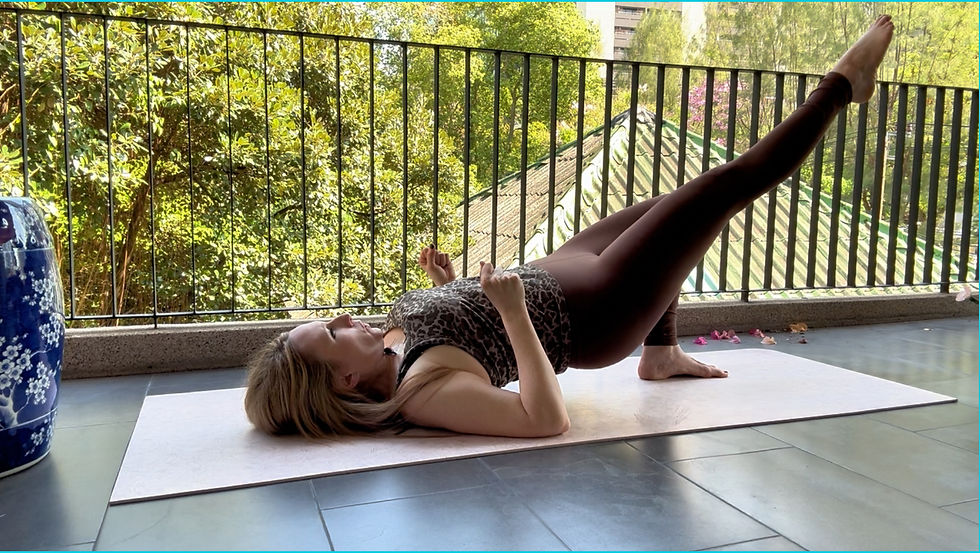
One of the most effective movements in this practice is Bridge Pose (Setu Bandha Sarvangasana).
Bridge Pose strengthens the glutes, hamstrings, and back body, helping create stability for the pelvis and spine.
In this practice, we add a walking bridge variation, extending one leg at a time while maintaining hip stability.
This variation helps:
strengthen the glutes
build hip stability
support the low back
improve pelvic control
When practiced with slow breathing and mindful engagement, bridge pose becomes a powerful way to build strength while protecting the spine.
Mountain Climbers for Core and Shoulder Stability
The practice then moves into plank and mountain climber variations.
These movements strengthen several important muscle groups:
core muscles
shoulders and arms
hip stabilizers
legs
Mountain climbers performed with control emphasize core engagement and stability rather than speed.
Maintaining a strong plank foundation helps:
strengthen the abdominals
improve posture
support spinal stability
build functional strength for daily movement
Low Lunge for Hip Flexor and Psoas Stretch
After building strength, the practice transitions into Low Lunge, a pose that stretches the hip flexors and psoas muscles.
The psoas muscle runs from the lumbar spine through the pelvis and attaches to the upper thigh. When this muscle becomes tight, it can contribute to tension in the low back.
Low lunge helps:
open the front of the hips
stretch the psoas muscle
improve hip mobility
support healthier spinal movement
By combining core engagement with hip opening, the pose provides both stability and mobility at the same time.
Functional Strength Through High Lunge
High lunge variations build strength in the:
legs
glutes
core
stabilizing muscles
Adding arm movements and balance challenges increases coordination and helps train the body to move with strength and control.
Linking breath with movement in these poses supports the vinyasa principle of synchronizing breath and motion, helping the body move more efficiently.
Upper Back Strength and Posture Support
The practice also includes prone upper back strengthening, which helps improve posture.
These movements strengthen the:
upper back muscles
shoulders
spinal stabilizers
Developing strength in the upper back can help counteract the effects of prolonged sitting and forward-rounded posture.
It also helps support better alignment through the neck and shoulders.
Gentle Spinal Twists and Yin Stretch
The practice concludes with gentle stretching to release tension built during strengthening work.
This includes a spinal twist and a yin-inspired pose sometimes called “Cat Chasing Its Tail.”
These poses help:
release the spine
improve mobility through the back body
reduce tension in the hips and legs
calm the nervous system
Ending with slower poses allows the body to integrate the strength work performed earlier in the practice.
The Role of Rest in Building Strength
The practice closes in Savasana, a final relaxation pose.
Rest is an important part of yoga because it allows the nervous system to settle and helps the body integrate the benefits of the practice.
Strength, mobility, and recovery all work together to support long-term physical health.
Final Reflection
Strength building in yoga is not about forcing the body into difficult shapes. Instead, it is about developing supportive strength that helps you move through life with greater ease.
Sometimes growth does not feel perfectly steady.
As the closing poem in the practice reminds us:
The wobble was not weakness.
It was foundation being tested and strengthened.
Yoga teaches us that strength often develops quietly, breath by breath, movement by movement.
SEO Keywords Included in This Article
yoga for low back support
gentle yoga strength
psoas stretch yoga
yoga for tight hips
bridge pose benefits
core strengthening yoga
yoga for glutes
yoga for posture
beginner strength yoga
gentle yoga for back health
FAQ (AEO + GEO Optimized)
Is strengthening yoga good for low back pain?
Yes. Strengthening the core, glutes, and stabilizing muscles can help support the spine and reduce strain on the lower back.
What yoga poses help strengthen the glutes?
Bridge pose, high lunge, and controlled plank variations are effective yoga movements for building glute strength.
Why does the psoas affect the low back?
The psoas muscle connects the lumbar spine to the upper leg. When tight or overworked, it can contribute to tension or discomfort in the low back.
Is yoga strength training good for beginners?
Yes. Gentle strength-building yoga practices help develop stability, mobility, and body awareness in a safe and accessible way.


Comments