Upper Body Yin Yoga Reset for Stress Relief, Shoulder Tension & Inner Peace
- Katy Charoensatit
- May 18
- 5 min read
If your shoulders feel tight, your upper back feels heavy, or your nervous system feels overstimulated, this gentle Yin Yoga practice can help you soften tension and reconnect to a calmer state of mind. In this class, yoga teacher Katy guides you through long-held upper body stretches, mindful breathwork, and grounding stillness to help release stress stored in the shoulders, chest, neck, and spine.
This slow, beginner-friendly practice combines Yin Yoga, breath awareness, Hansi Mudra (the inner joy mudra), and restorative poses like Puppy Pose, Sphinx, Broken Wing, Bridge Pose, and Happy Baby to create a full upper body reset for both body and mind.
Whether you spend long hours sitting, carry stress in your shoulders, or simply need a slower practice to unwind, this sequence offers a deeply nourishing experience.

Eagle Arms with a small forward fold to open your tight shoulders.
What Is Yin Yoga?
Yin Yoga is a slow-paced style of yoga where poses are held for longer periods of time — often between one and five minutes. Unlike faster-moving yoga styles like Vinyasa, Yin focuses on relaxing the muscles so gentle stress can reach the deeper connective tissues of the body, including:
Fascia
Ligaments
Tendons
Joints
This meditative approach allows time and gravity to gradually soften areas of chronic tightness, especially in the hips, spine, shoulders, and chest.
In this practice, Katy emphasizes:
Relaxed breathing
Nervous system regulation
Gentle shoulder and chest opening
Mindful body awareness
Emotional softness and inner peace
The result is a calming practice that supports both physical mobility and emotional restoration.

How to do the Hansi Mudra the mudra for finding your inner smile
Benefits of This Upper Body Yin Yoga Practice
1. Releases Shoulder and Upper Back Tension
Modern life often creates chronic tension in the:
Upper trapezius
Neck
Shoulder blades
Chest muscles
This class uses poses like Eagle Arms, Criss-Cross Arms, Puppy Pose, and Broken Wing Pose to gently stretch the shoulder girdle and improve mobility around the scapula and upper spine.
These slow holds can help counteract:
Desk posture
Phone posture
Emotional stress
Tight chest muscles
Rounded shoulders
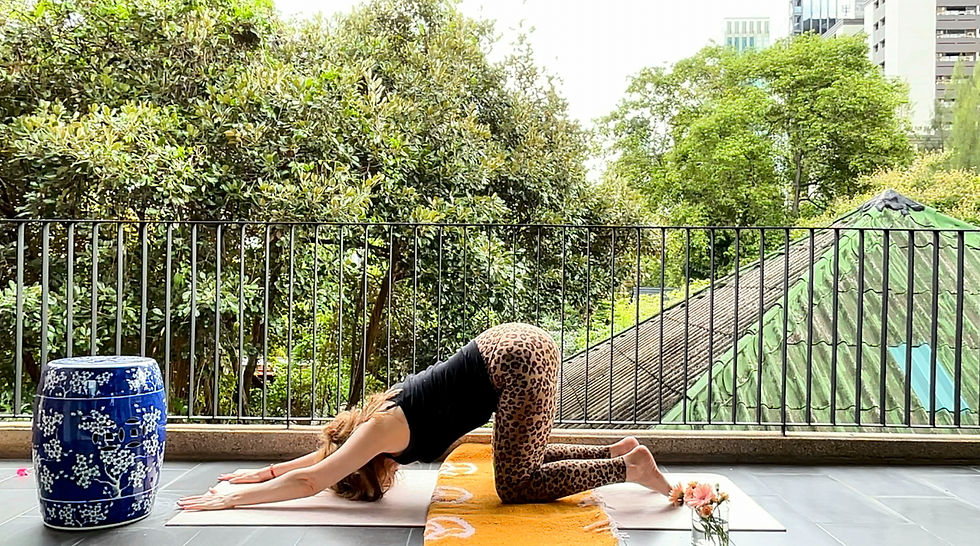
Yin Puppy Pose or Melting Heart
2. Helps Calm the Nervous System
Early in the practice, Katy guides a simple breath technique using:
Two small inhales through the nose
One long exhale through the mouth
This resembles a physiological sigh breathing pattern, which may help down-regulate the nervous system and encourage relaxation.
Combined with long-held Yin poses, the practice supports:
Stress relief
Emotional grounding
Reduced mental overstimulation
Relaxation before sleep
Mind-body awareness
3. Opens the Chest and Improves Posture
Many people carry tightness across the front body from prolonged sitting and stress. The chest-opening postures in this sequence help create more spaciousness through the:
Pectoral muscles
Front shoulders
Upper spine
Rib cage
Poses like Broken Wing and Puppy Pose encourage gentle extension through the thoracic spine while helping improve posture awareness.
4. Supports Low Back Stability While Opening the Upper Body
Although this class focuses on the upper body, Katy consistently reminds students to engage the lower belly to support the low back during forward folds and shoulder stretches.
This creates a safer and more supportive experience while:
Protecting the lumbar spine
Improving core awareness
Supporting spinal alignment
Preventing over-compression in the lower back
Bridge Pose at the end of the practice also helps activate the glutes and stabilize the pelvis after deep opening work.
Key Poses in This Practice
Hansi Mudra (Inner Joy Mudra)
The practice begins with Hansi Mudra, sometimes called the “inner smile” mudra.
To practice:
Touch your thumb to all fingers except the pinky.
Leave the pinky extended.
Rest your hands on your knees.
Soften your breath and settle inward.
This mudra symbolizes inner contentment, joy, and peace — themes woven throughout the class.
Eagle Arms Stretch
This seated variation stretches:
Shoulder blades
Upper back
Rear shoulders
Scapular muscles
The gentle forward fold deepens the stretch while encouraging breath awareness.
Puppy Pose (Melting Heart Pose)
Puppy Pose creates a deep opening through:
Chest
Shoulders
Armpits
Upper spine
This pose can feel especially therapeutic for people with rounded posture or upper back stiffness.
Modification tip:
If placing the forehead on the mat feels uncomfortable, turning the head to one side may feel better.
Sphinx Pose
Sphinx Pose offers a gentle backbend that may help:
Reduce stiffness in the lower back
Open the chest
Encourage spinal extension
Improve posture awareness
Katy suggests walking the arms slightly forward if compression appears in the low back.
Broken Wing Pose
Broken Wing Pose is one of the deepest shoulder openers in Yin Yoga.
This posture targets:
Front shoulders
Chest muscles
Biceps
Fascia surrounding the shoulder joint
Important reminder:
If you experience numbness, tingling, burning, or sharp pain, ease out of the pose immediately.
Bridge Pose
Bridge Pose helps re-engage strength and stability after deep stretching by activating:
Glutes
Hamstrings
Core muscles
Katy emphasizes gently squeezing the inner thighs toward each other to stabilize the pelvis and support the low back.
Happy Baby Pose
Happy Baby offers a soothing release for:
Lower back
Inner hips
Sacrum
The gentle rocking motion can also feel calming for the nervous system after deeper shoulder work.
The Emotional Theme: Inner Joy & Enoughness
One of the most powerful aspects of this practice is the closing reflection during Savasana.
Katy reads a poem called The Well Within, reminding students that peace does not come from productivity or achievement, but from resting in simple presence.
A central message of the practice is this:
“It is the simple radical grace of existing exactly as you are.”
This emotional grounding makes the class feel less like a workout and more like a nervous system reset and act of self-kindness.
Who Is This Yoga Class Good For?
This gentle upper body Yin Yoga practice may be especially supportive for:
Beginners
People with desk jobs
Anyone carrying stress in the shoulders or neck
People seeking nervous system support
Those needing a calming evening practice
Students wanting gentle flexibility work
Anyone looking for emotional softness and relaxation
Because the class is slow-paced and highly modifiable, it can work well for many experience levels.
Final Thoughts
This Upper Body Yin Yoga Reset is more than a stretching class. It is an invitation to soften, breathe, and reconnect with yourself through mindful movement and stillness.
Through shoulder openers, breathwork, gentle spinal support, and restorative rest, the practice helps create space not only in the body, but also in the mind.
If you have been feeling overwhelmed, tense, emotionally drained, or physically tight through the upper body, this class offers a deeply compassionate reset.
May you know kindness.
May you know peace.
May you know love.
Namaste.


Comments